
Why Diet Matters for Your Smile
When we think about maintaining a healthy smile, brushing and flossing are usually the first things that come to mind. However, one of the most important yet often overlooked factors is diet and oral health. What you eat and drink every day directly affects your teeth, gums, and overall dental health. From sugary snacks to acidic beverages, your food choices can either protect your smile or slowly damage it.
Your mouth is the first point of contact for everything you consume. The nutrients you provide your body also feed the tissues in your mouth. A balanced diet supports strong enamel, healthy gums, and a reduced risk of common issues like tooth decay, gum disease, and bad breath.
How Sugar Impacts Teeth
One of the biggest culprits affecting oral health is sugar. When you consume sugary foods and drinks, bacteria in your mouth feed on these sugars and produce acids. These acids attack the tooth enamel, leading to cavities and enamel erosion. Frequent snacking on sweets or sipping sugary beverages throughout the day increases the duration of acid attacks on your teeth.
Sticky candies, soft drinks, packaged juices, and even flavored coffee can significantly increase the risk of tooth decay. The problem is not just the amount of sugar but also how often you consume it. Constant exposure creates an ideal environment for harmful bacteria to thrive. Reducing sugar intake and maintaining proper dental care habits can significantly lower the risk of damage.
The Role of Acidic Foods and Drinks
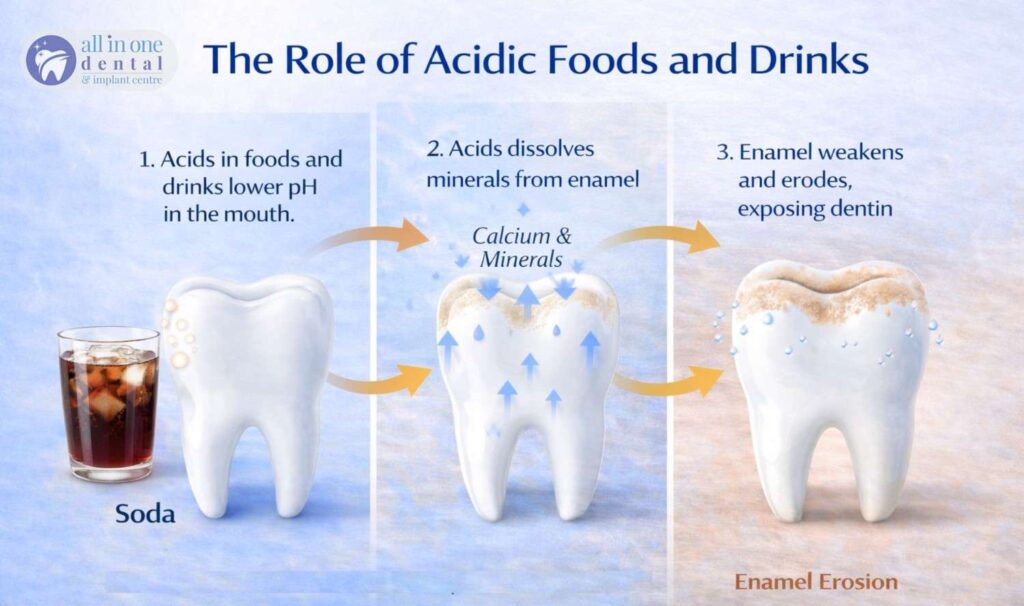
Acidic foods and beverages also play a major role in weakening tooth enamel. Citrus fruits, carbonated drinks, sports drinks, and vinegar-based foods can gradually erode enamel, making teeth more sensitive and vulnerable. Enamel erosion can lead to discoloration, increased sensitivity, and a higher chance of cavities.
While you do not need to completely avoid acidic foods, moderation is key. Rinsing your mouth with water after consuming acidic items and waiting at least 30 minutes before brushing can help protect your enamel.
Nutrients That Strengthen Teeth and Gums
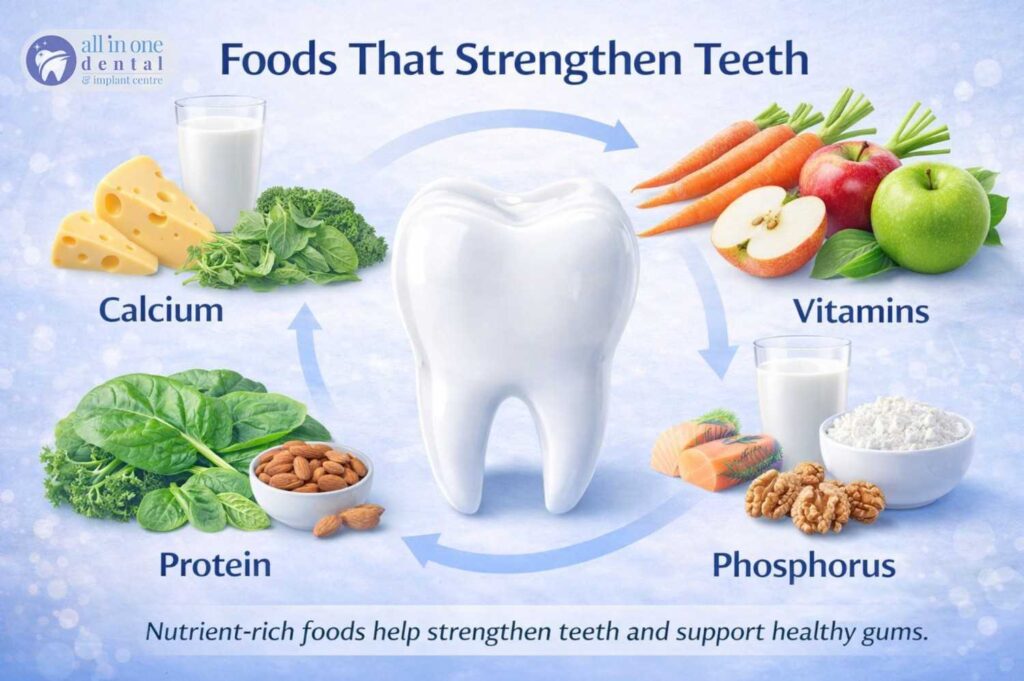
Just as some foods harm your teeth, others actively support strong oral health. Calcium-rich foods like milk, cheese, and yogurt help strengthen enamel and bones. Phosphorus, found in eggs, fish, and nuts, works alongside calcium to rebuild and protect tooth structure.
Vitamin D is essential because it helps your body absorb calcium effectively. Meanwhile, vitamin C plays a crucial role in maintaining healthy gums and preventing gum disease. Leafy greens, fresh vegetables, and fruits rich in antioxidants can reduce inflammation and support gum tissue.
Crunchy fruits and vegetables like apples and carrots stimulate saliva production. Saliva is your mouth’s natural defense system, washing away food particles and neutralizing harmful acids. A balanced diet filled with nutrient-dense foods supports overall dental health and reduces the risk of long-term complications.
The Connection Between Diet and Gum Disease
Poor nutrition can weaken your immune system, making it harder for your body to fight infections such as gum disease. Diets high in processed foods and low in essential nutrients may contribute to inflammation in the body, including the gums.
Gum disease often starts as gingivitis, which causes redness, swelling, and bleeding. If left untreated, it can progress into periodontitis, a more serious condition that may result in tooth loss. Maintaining a nutrient-rich diet alongside consistent oral hygiene practices can significantly reduce this risk.
Hydration also plays a key role. Drinking enough water throughout the day helps maintain saliva flow, which is vital for controlling bacteria and protecting the soft tissues of the mouth.
Snacking Habits and Oral Health
Frequent snacking is one of the hidden dangers to oral health. Every time you eat, acids are produced in your mouth. If you snack constantly, your teeth are under continuous acid attack. This does not give your enamel enough time to recover.
If you need snacks during the day, choose tooth-friendly options such as nuts, cheese, yogurt, or fresh vegetables. Limiting sugary and processed snacks can dramatically improve your dental care outcomes. Timing also matters—eating sweets with meals rather than alone can reduce the harmful effects since saliva production is higher during main meals.
Building a Tooth-Friendly Diet
Creating a diet plan that supports oral health does not have to be complicated. Focus on whole foods, reduce sugar intake, limit acidic beverages, and stay hydrated. Combine good nutrition with regular brushing, flossing, and professional dental check-ups.
Education about nutrition empowers patients to take control of their oral health before problems develop. Small dietary changes can make a significant difference in preventing tooth decay, enamel erosion, and gum disease.
Conclusion
The connection between diet and oral health is undeniable. What you eat every day influences the strength of your enamel, the health of your gums, and your overall dental health. By reducing sugar, limiting acidic foods, and incorporating nutrient-rich options, you can protect your smile for years to come.
At All in One Dental, we believe that complete dental care goes beyond treatment—it includes education and preventive guidance. Our team is committed to helping you maintain excellent oral health through personalized advice, regular check-ups, and advanced dental solutions. A healthy diet combined with professional care is the foundation of a confident, lasting smile.