
Understanding Tooth Loss in Seniors
Tooth loss in seniors can occur due to gum disease, decay, injury, or long-term wear and tear. Missing teeth can affect chewing ability, speech clarity, facial structure, and self-confidence. Thankfully, there are effective tooth replacement options for seniors, with dentures and implants being the most popular.
When comparing dentures vs implants for seniors, it’s important to understand how each solution works and what benefits they offer.
What Are Dentures?
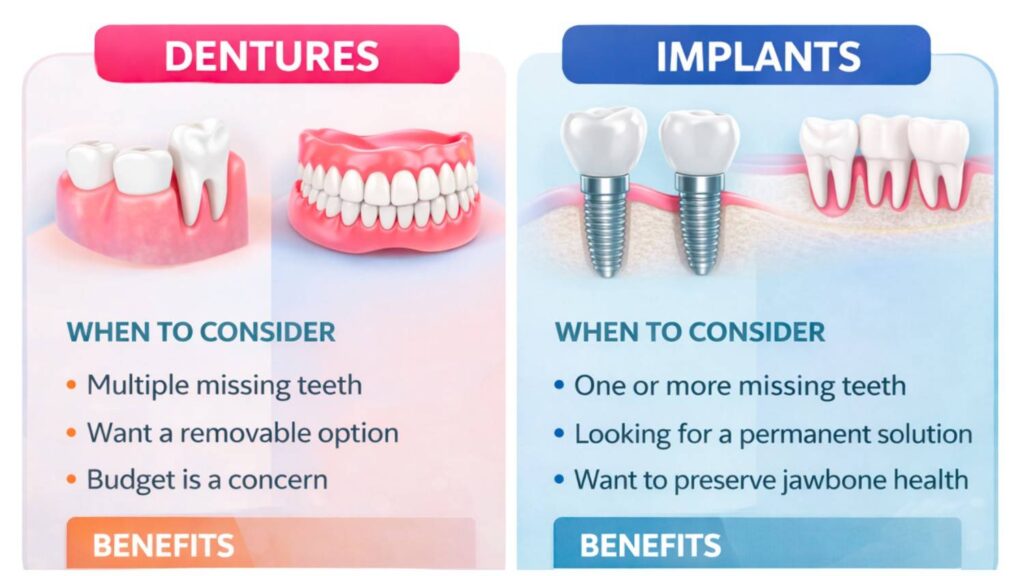
Dentures are removable appliances designed to replace missing teeth and surrounding tissues. They can be full (replacing all teeth) or partial (replacing some missing teeth).
Benefits of Dentures for Seniors
Dentures for seniors are often considered a more affordable and non-invasive solution. Some advantages include:
- Lower upfront cost compared to implants
- Non-surgical procedure
- Suitable for patients with significant bone loss
- Faster treatment timeline
Modern dentures are more natural-looking and comfortable than older versions. For seniors seeking affordable dentures, this option can restore appearance and basic function effectively.
Limitations of Dentures
However, when evaluating dentures vs implants for seniors, dentures do have some drawbacks:
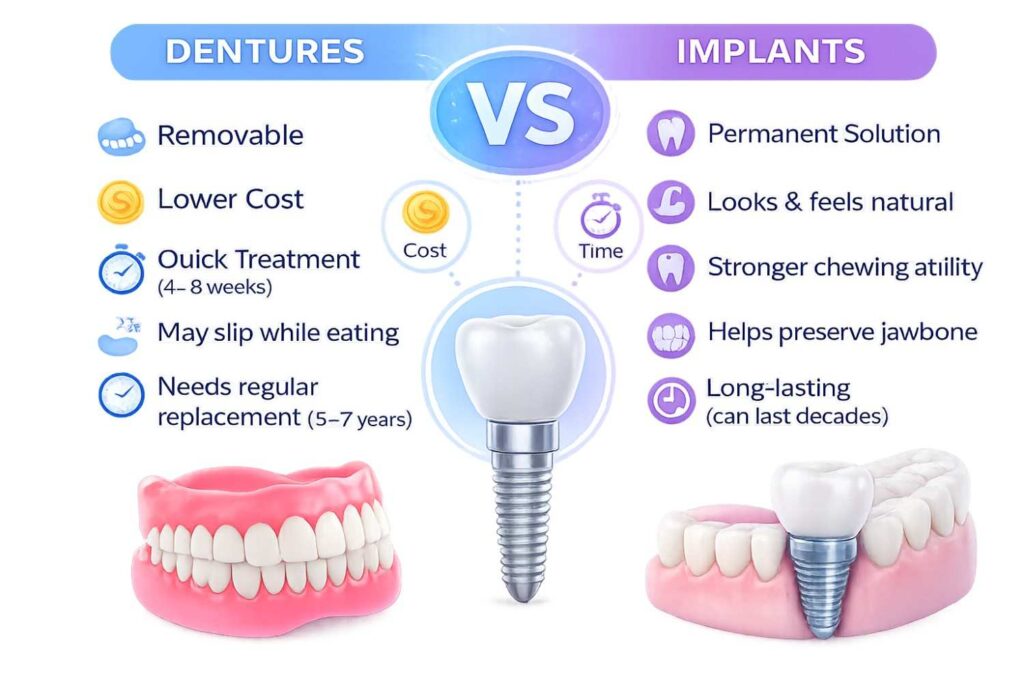
- May slip or move while eating or speaking
- Require adhesives in some cases
- Need periodic adjustments or replacements
- Do not prevent jawbone loss
Over time, the jawbone may shrink because dentures do not stimulate bone like natural teeth.
What Are Dental Implants?
Dental implants are titanium posts surgically placed into the jawbone to act as artificial tooth roots. A crown, bridge, or denture is then attached to the implant.
When discussing dental implants for seniors, many patients are surprised to learn that age alone is not a limiting factor. As long as overall health and bone condition are suitable, implants can be an excellent option.
Benefits of Dental Implants for Seniors
When comparing dentures vs implants for seniors, implants offer several long-term advantages:
- Permanent and stable solution
- Feel and function like natural teeth
- Prevent jawbone loss
- No slipping or clicking sounds
- Long-lasting (often decades with proper care)
Permanent dental implants provide superior chewing ability, allowing seniors to enjoy a wider variety of foods without discomfort.
Considerations Before Choosing Implants
While implants have many benefits, they may not be suitable for everyone. Some considerations include:
- Higher initial cost
- Requires minor surgical procedure
- Adequate bone density required
However, even patients with bone loss may qualify for bone grafting procedures to support implants.
Dentures vs Implants for Seniors: Cost Comparison
Cost is often a deciding factor. Dentures generally have a lower upfront price, making them attractive for seniors on a fixed income. However, they may require ongoing maintenance, adjustments, or replacements.
Implants, while more expensive initially, are a long-term investment. When evaluating dentures vs implants for seniors, it’s important to consider lifetime value rather than just the initial expense.
Comfort and Lifestyle Differences
Lifestyle plays a significant role in choosing between dentures and implants.
Dentures may require removal at night and special cleaning routines. Some seniors find them slightly uncomfortable during the adjustment period.
Implants, on the other hand, become part of your mouth structure. They do not require removal and can be maintained like natural teeth with brushing and flossing.
For active seniors who value convenience and stability, dental implants for seniors often provide greater confidence and freedom.
Bone Health and Facial Structure
One major difference in the dentures vs implants for seniors comparison is bone preservation.
When a tooth is lost, the jawbone begins to shrink due to lack of stimulation. Dentures rest on the gums and do not prevent this process. Over time, this can cause facial sagging and a sunken appearance.
Dental implants stimulate the jawbone just like natural roots, helping maintain facial structure and preventing premature ageing.
Which Option Is Better for Seniors?
There is no one-size-fits-all answer when comparing dentures vs implants for seniors. The best option depends on:
- Overall health
- Bone density
- Budget
- Personal comfort preference
- Number of missing teeth
For seniors seeking a non-surgical and budget-friendly option, dentures may be suitable. For those looking for a long-term, stable, and natural-feeling solution, implants are often the preferred choice.
A professional dental evaluation is essential to determine the most appropriate treatment plan.
Making the Right Decision
Choosing between dentures and implants is an important decision that impacts daily life, nutrition, and confidence. Understanding the pros and cons of dentures vs implants for seniors helps patients feel more confident about their choice.
Modern dentistry offers safe and effective solutions for seniors at every stage of life. With proper guidance, restoring your smile can significantly improve comfort and overall wellbeing.
Expert Guidance at All in One Dental
At All in One Dental, we provide personalised consultations to help seniors explore the best tooth replacement options. Whether you are considering affordable dentures or permanent dental implants, our experienced team will guide you through every step with care and clarity.
If you or a loved one is deciding between dentures vs implants for seniors, schedule a consultation with our team today and take the first step toward a confident, healthy smile.